How to Tell If a Diamond Is Real: The Complete 2025 Guide
Diamonds are one of the most sought-after and expensive gemstones in the world. But with synthetic stones, simulants, and scams on the rise, the question many people ask is: how to tell if a diamond is real? Whether you’re buying a new piece, evaluating an heirloom, or considering a resale, verifying the authenticity of a diamond is critical—both emotionally and financially.
In this guide, you’ll learn everything you need to know about distinguishing real diamonds from fake ones, with expert-approved methods and professional tips. Let’s dive in.
Why Verifying a Diamond’s Authenticity Matters
A real diamond is a symbol of love, strength, and timeless beauty. But it’s also a significant investment. Wearing or gifting a fake—especially unknowingly—can carry emotional disappointment and financial loss. Plus, many simulants today are impressively convincing. That’s why using trusted methods and professional support is crucial.
At Golden Hands, we specialize in custom design, stone replacement, and jewellery sizing—which often involve evaluating the authenticity and quality of stones.
How to Tell If a Diamond Is Real at Home
Let’s start with non-destructive tests you can try yourself. While these aren’t 100% accurate, they help you spot clear fakes and decide if you should seek professional help.
1. The Fog Test
Breathe on the stone like you would a mirror. A real diamond disperses heat instantly and will not fog up for more than a second. If the fog lingers, it’s likely a simulant.
2. The Water Test
Drop the loose stone into a glass of water. Due to its high density, a real diamond will sink. If it floats or falls slowly, it’s probably fake.
3. The Read-Through Test
Place the flat side of the diamond on top of text (like newspaper). If you can read the text clearly through the stone, it’s likely not a diamond. Real diamonds bend light too strongly to allow clear readability.
4. The Sparkle Test
Hold the stone under direct light and observe the sparkle. Real diamonds reflect both white (brilliance) and colored light (fire). Most imitations produce excessive rainbow effects or dull flashes.
5. The UV Light Test
Under UV light, many diamonds glow blue. But not all do. So while fluorescence can support authenticity, its absence doesn’t prove a fake.
6. Heat Resistance Test (Optional)
Heat the stone with a lighter for 30–40 seconds, then drop it into cold water. A fake (like glass) will shatter from the rapid temperature change. A real diamond will remain intact. Warning: don’t try this on mounted jewellery.

Professional Tests: The Reliable Way
Home tests can only get you so far. For high-value pieces or legal/insurance matters, professional evaluation is essential.
1. Thermal Conductivity Test
Real diamonds conduct heat differently from most other materials. Jewelers use thermal diamond testers to detect this. Moissanite, however, may pass this test—so it’s not foolproof.
2. Electrical Conductivity Test
Moissanite conducts electricity; real diamonds do not. A professional jeweler may use an electrical tester to distinguish between the two.
3. Loupe or Microscope Inspection
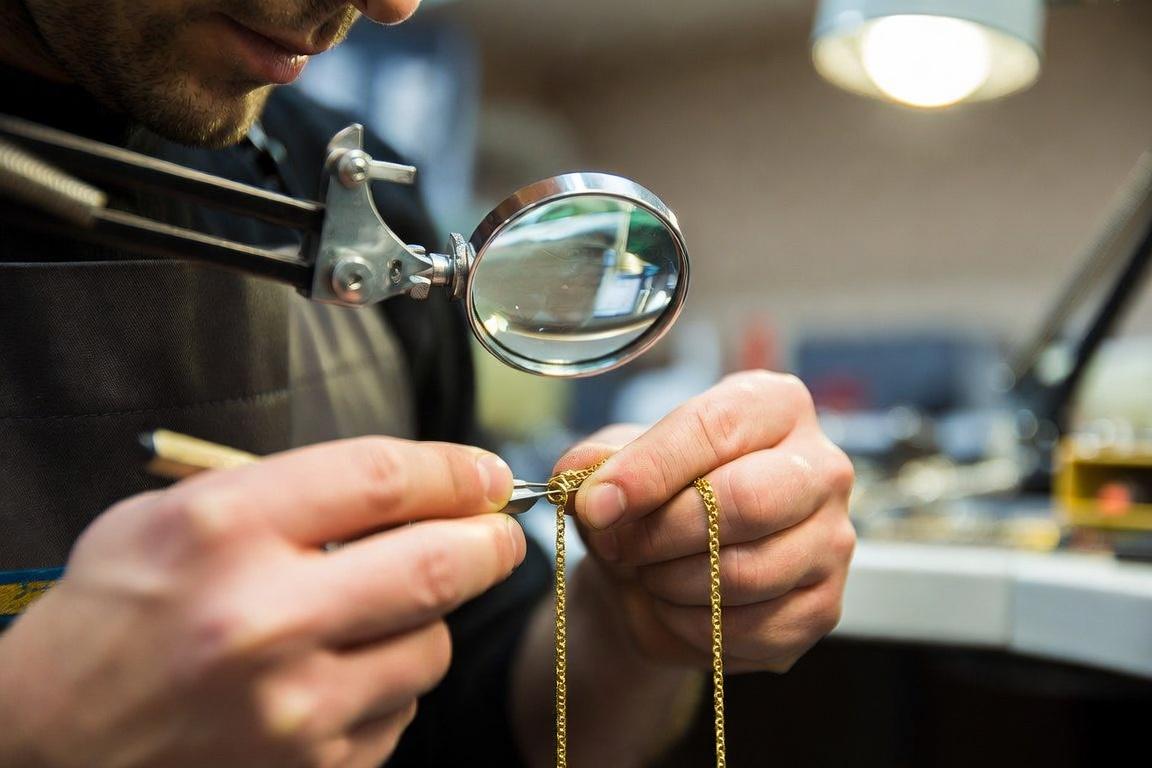
Under magnification, diamonds often display natural inclusions, sharp facet junctions, and slight imperfections. Fakes tend to look too clean and symmetrical. Visit Golden Hands for a loupe evaluation during your next cleaning & polishing or re-tipping service.
4. Certificate Verification
Trusted labs like GIA, IGI, or AGS provide certification. Use their online tools to verify your diamond’s serial number and characteristics. If the stone lacks a certificate, request one before purchase.
5. Laser Inscription
Many certified diamonds have a microscopic laser-inscribed ID number. Jewelers can view this under magnification and verify it against the certification.
Top Diamond Simulants and How to Spot Them
| Simulant | Appearance | Test Clues |
|---|---|---|
| Moissanite | Sparkles brightly | Conducts electricity, may pass thermal test |
| Cubic Zirconia | Looks clean | Duller brilliance, heavier, fogs up |
| White Sapphire | Slight sparkle | Lacks fire, scratches more easily |
| Glass | Dull or bubbly | Soft, fragile, often contains visible bubbles |
Are Lab-Grown Diamonds Real?
Yes—lab diamonds are real. They’re chemically and physically identical to mined diamonds but created in a lab under high pressure and heat. They are:
- Less expensive
- More sustainable
- Still eligible for certification
The only difference is origin. Most experts, including Brilliant Earth, agree that lab diamonds are real and a smart alternative.
How to Avoid Diamond Scams
Here are key tips:
- Buy from reputable jewelers with clear policies
- Ask for GIA or IGI certification
- Avoid prices that seem too good to be true
- Use a credit card for fraud protection
- Inspect the return and warranty policies
Golden Hands offers diamond evaluations alongside custom design, ensuring you know what you’re paying for before setting it in your dream piece.
When to Verify a Diamond
- Before buying a diamond (online or retail)
- Before stone setting or engraving
- If you inherit a diamond from a family member
- Before selling or insuring a piece
Final Thoughts
Figuring out how to tell if a diamond is real doesn’t have to be intimidating. While DIY tests can provide basic insights, the most reliable approach combines:
- Thermal/electrical testing
- Loupe inspection
- Certification
If in doubt, book a session with a professional jeweler. Golden Hands offers full assessments for all types of stones, and our team of trained specialists can walk you through every detail.
FAQ: How to Tell If a Diamond Is Real
1. Can a fake diamond pass a thermal test?
Yes—moissanite can. That’s why electrical testing is also important.
2. Are lab diamonds considered fake?
No. They’re real diamonds grown in a lab, not imitations.
3. What’s the easiest way to tell if a diamond is fake at home?
Try the fog or water test—but follow up with professional verification.
4. Do all real diamonds glow under UV light?
No. About 30% of diamonds fluoresce blue, but the rest don’t.
5. Can Golden Hands verify my diamond?
Yes! We offer full diamond evaluation and support services.